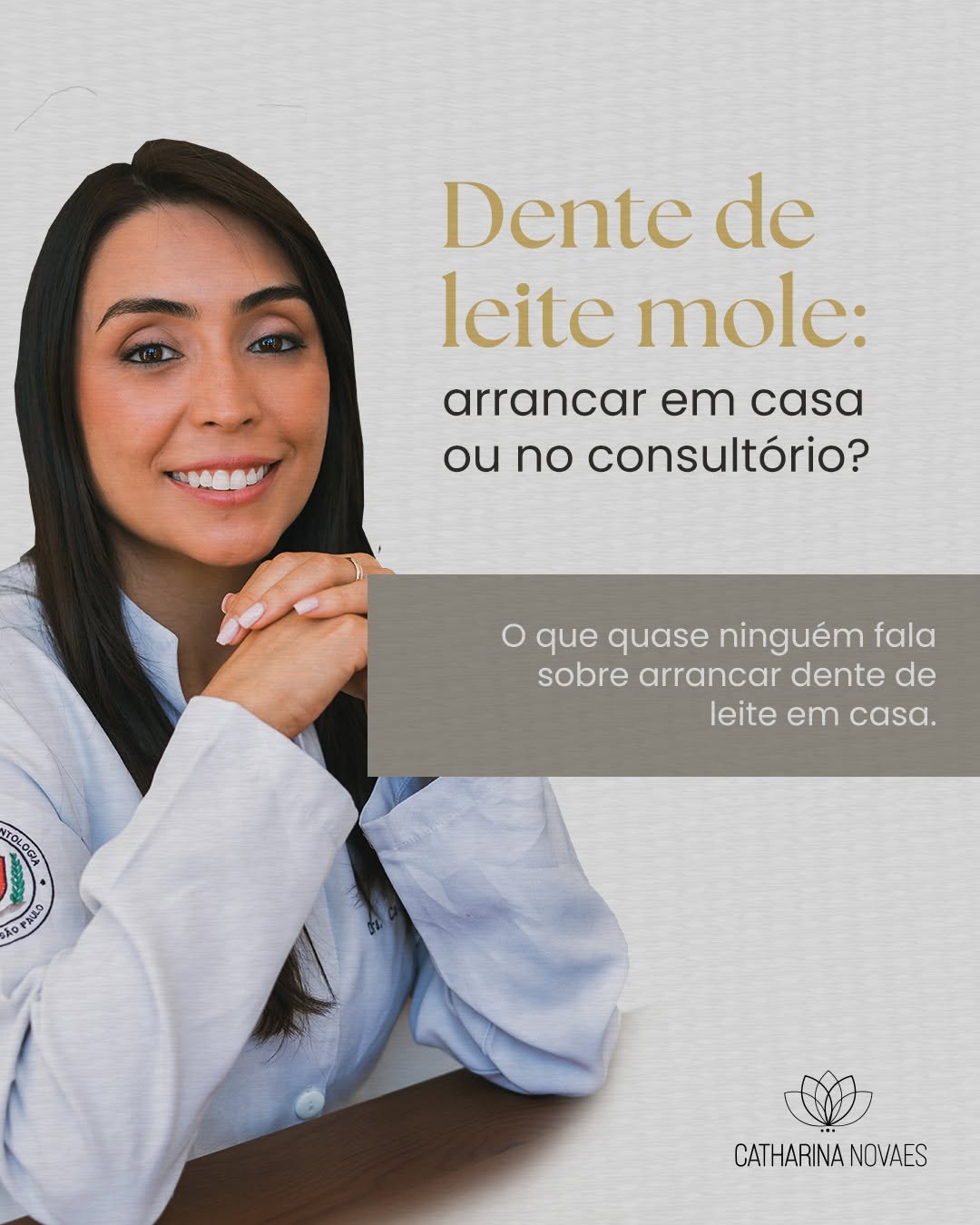
Dairy tooth wiggling is not always a sign that it's ready to come out. Pulling it forcefully can cause pain and interfere with the eruption of the permanent tooth. With some practical signs, you can safely decide whether to wait, help at home, or schedule an evaluation. I attend families in Porto/Matosinhos and am here to guide you calmly.
Why "pulling the tooth" might be bad advice
The baby tooth has a root that gradually resorbs to make way for the permanent one. Pulling it too early can tear tissue that is still attached. Besides being painful, it can bleed more and scare the child.
- Risk of trauma to the gum and the area around the tooth.
- Higher likelihood of infection if an open wound heals poorly.
- Possible interference with the path of the emerging permanent tooth.
- Premature loss of space, leading to shifts that favor future misalignment.
Practical Checklist: wait, help at home, or visit the clinic?
Use this simple guide to decide the next step.
You can probably wait/help at home if:
- The tooth rotates and moves in all directions without pain.
- There is no redness, pus, or bad smell.
- The child chews normally and feels calm.
Try safely at home:
- Wash hands well; use clean gauze to support the tooth.
- Make gentle back-and-forth movements; stop immediately if it hurts.
- Offer crunchy foods (apple, carrot) if the child accepts.
- If it bleeds, compress with gauze for 5–10 minutes.
Seek the clinic if:
- There is pain, swelling, fever, persistent bad breath, or bleeding that doesn't stop.
- The permanent tooth has already emerged behind/next to it and the baby tooth remains "stuck."
- Mobility hasn't progressed for more than 3 months or there was trauma to the mouth.
- The child is very anxious or the tooth broke.
"Shark teeth": when the permanent tooth emerges behind
It's common in the lower incisors and often resolves once the baby tooth falls out. Still, it's worth monitoring. If the permanent tooth is high and the baby tooth is barely mobile, the bite may start to misalign.
In these cases, an evaluation helps decide if it's worth removing the baby tooth to clear the way. This reduces discomfort and protects the space for proper alignment.
What not to do at home
- No "string on the door," abrupt twists, or dry pulls.
- Do not use sharp objects to "detach."
- Avoid direct ice for too long or homemade substances on the gum.
- Do not reward "courage to pull." Focus on safety and comfort.
How evaluation prevents orthodontic problems
A short consultation allows checking the space, the state of the gum, and the path of the permanent tooth. When the exit is early and unplanned, neighboring teeth may tilt into the empty space.
- If there is a loss of space, a space maintainer may be indicated to preserve alignment.
- Interceptive evaluation around 6–7 years reduces the risk of crowding and misplaced eruptions.
- When removal is necessary, it is quick, with local anesthesia and clear post-procedure guidance.
Want to know more about tooth chronology? Also, check the NHS – Children’s teeth guide.
Quick questions parents ask
- At what age do they start falling out? Usually around 6 years, but it can vary and that's normal.
- How long can a tooth wiggle? Without pain or infection, it can take weeks to months.
- What if the permanent tooth has appeared and the baby tooth doesn't wiggle? It's a reason to evaluate; sometimes we remove the deciduous to clear the way.
- Is bleeding normal? A little, yes. It should stop with compression in 5–10 minutes.
Quick myths and truths
- Myth: "If it's loose, just pull it." Truth: mobility doesn't always mean the root is resorbed.
- Myth: "Baby teeth have no root." Truth: they do, and it resorbs over time.
- Myth: "If it hurts, it's better to remove it right away." Truth: pain is a sign to evaluate, not to pull.
Micro-habits that help
- Gentle brushing also on the gum around the wiggling tooth.
- Flossing when possible, without forcing the tooth.
- Avoid "poking" with objects; encourage the child to report if it hurts.
- Balanced diet and water after sticky snacks.
Next steps
If you're unsure, you don't have to decide alone. You can send me a message for quick guidance or schedule a consultation at the Porto/Matosinhos office. Together we decide whether it's better to wait, help safely at home, or remove at the clinic, without pulls and without scares.