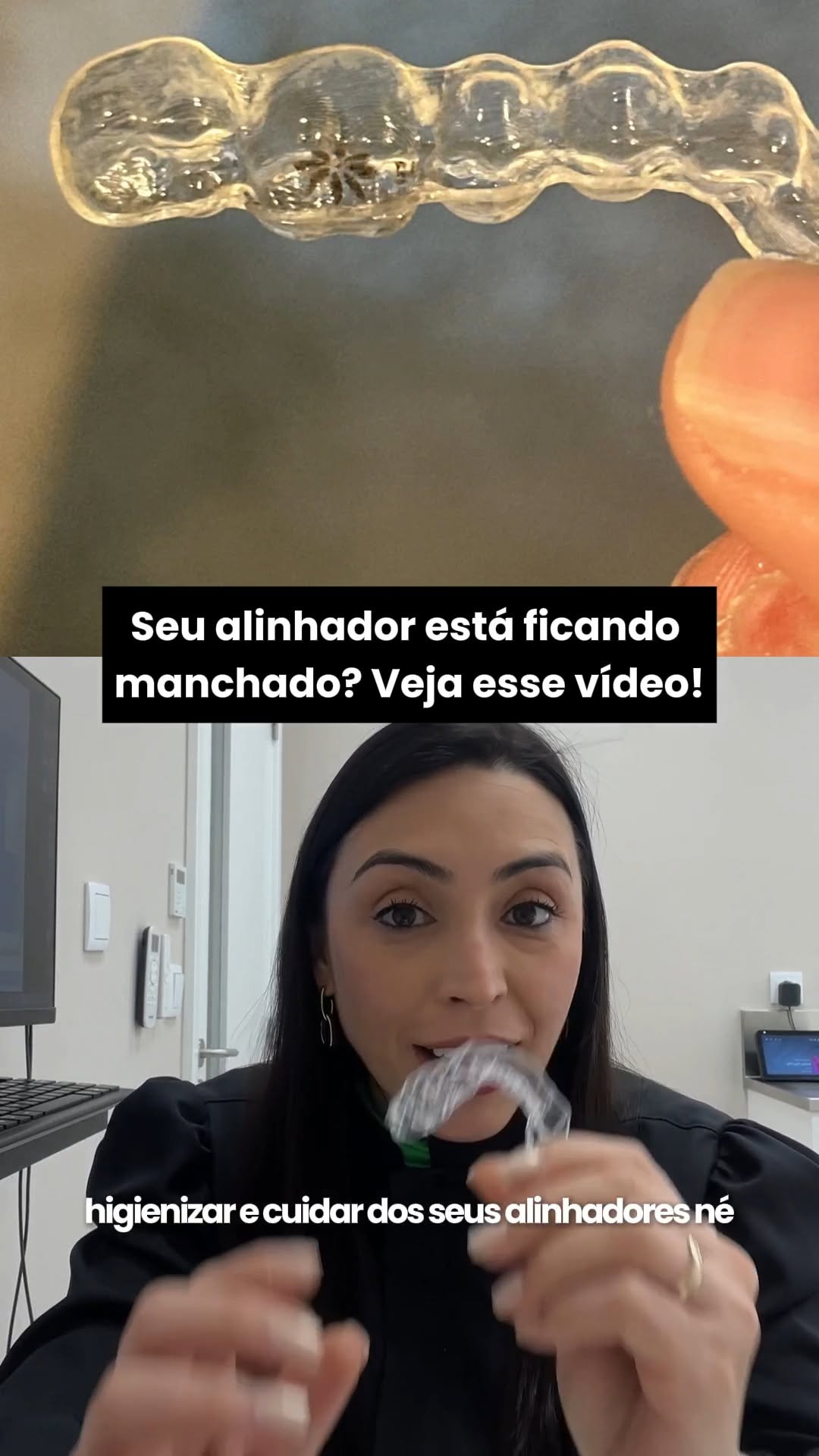
Consistent use of aligners is what moves your teeth every day. Light and continuous forces maintain progress; repeated breaks cause the body to slow down and can create gaps. It's not about blame, but about adjusting your routine with awareness and small daily choices.
The Principle of Continuous Forces
Aligners work when they are in the mouth most of the day. The force is gentle yet constant, signaling to the body that it's time to remodel the tissues around the tooth. Interrupting this force repeatedly causes the biological response to lose rhythm. The tooth doesn't understand "exceptions"; it responds to patterns.
What Happens During Breaks in the Day
Each extra removal is a break in the aligner's work. In sequence, these breaks can cause small losses in fit. The aligner may still fit, but not seal the same: gaps appear, and the tooth falls behind. Repeated breaks lead to delays. Fit today, less refinement tomorrow.
How Many Hours a Day to Wear the Aligner?
Generally, the recommendation is to wear the aligner for 20 to 22 hours daily, unless advised otherwise by your orthodontist. The more useful wear time, the greater the efficiency. For reinforcement, also consult the guidance of the British Orthodontic Society.
Fitting vs. Seating: How to Feel the Difference
Fitting is merely getting the aligner in your mouth. Seating is when it seals completely, without gaps at the edges and no elevated tips. After a longer break, use chewies for 5–10 minutes upon reinsertion to help with seating. If the aligner's tip doesn't touch the tooth over time, it's a sign of lost wear time.
Practical Daily Use Guide
- Set fixed windows: 2–3 times a day (meals + hygiene) and time these windows.
- Always have a pocket kit: case, brush, floss, mini-rinse, elastics/chewies.
- Use reminders: alarms on your phone or smartwatch to reinsert without delays.
- Routine trigger: finished eating → brush → chewie → aligner. Simple and effective.
- Stay well-hydrated: a dry mouth makes seating and comfort difficult.
Plans for Atypical Days (Event/Travel Mode)
- Anticipate logistics: carry the case and mini-kit in your bag or backpack.
- Set a discreet alarm during the event to remind you to reinsert.
- Quick return after a break: clean, use a chewie for 5–10 min, and focus on the following hours.
- Travel: organize changes and confirm your schedule in advance.
Quick Myths and Truths
- Myth: "Removing only at lunch doesn't interfere." Truth: combined breaks impact the result.
- Myth: "If it fits, it's all good." Truth: without full seating, the planned force doesn't reach the tooth.
- Truth: more useful hours of daily use tend to yield better efficiency.
Warning Signs and When to Talk to Your Orthodontist
- Gaps that persist for several days, tips that don't touch, or "stalled" teeth.
- Too little pain combined with chronic gaps may indicate a loss of effective force.
- Loose or detached attachments require review. Don't advance changes without guidance.
- Frequent breaks? It's worth adjusting the plan, reviewing windows, and reinforcing seating techniques.
Next Steps: Shall We Adjust Your Routine?
It's not about control; it's about clarity and possible choices. If you want a practical plan of fixed windows that fits your schedule, talk to me. Send "ROUTINE" and receive a daily use checklist. If you notice gaps, send a photo of your side smile, and we'll discuss the next step. For appointments and support, visit the Clínica Catharina Novaes. We're here to prevent setbacks and turn well-used hours into results.