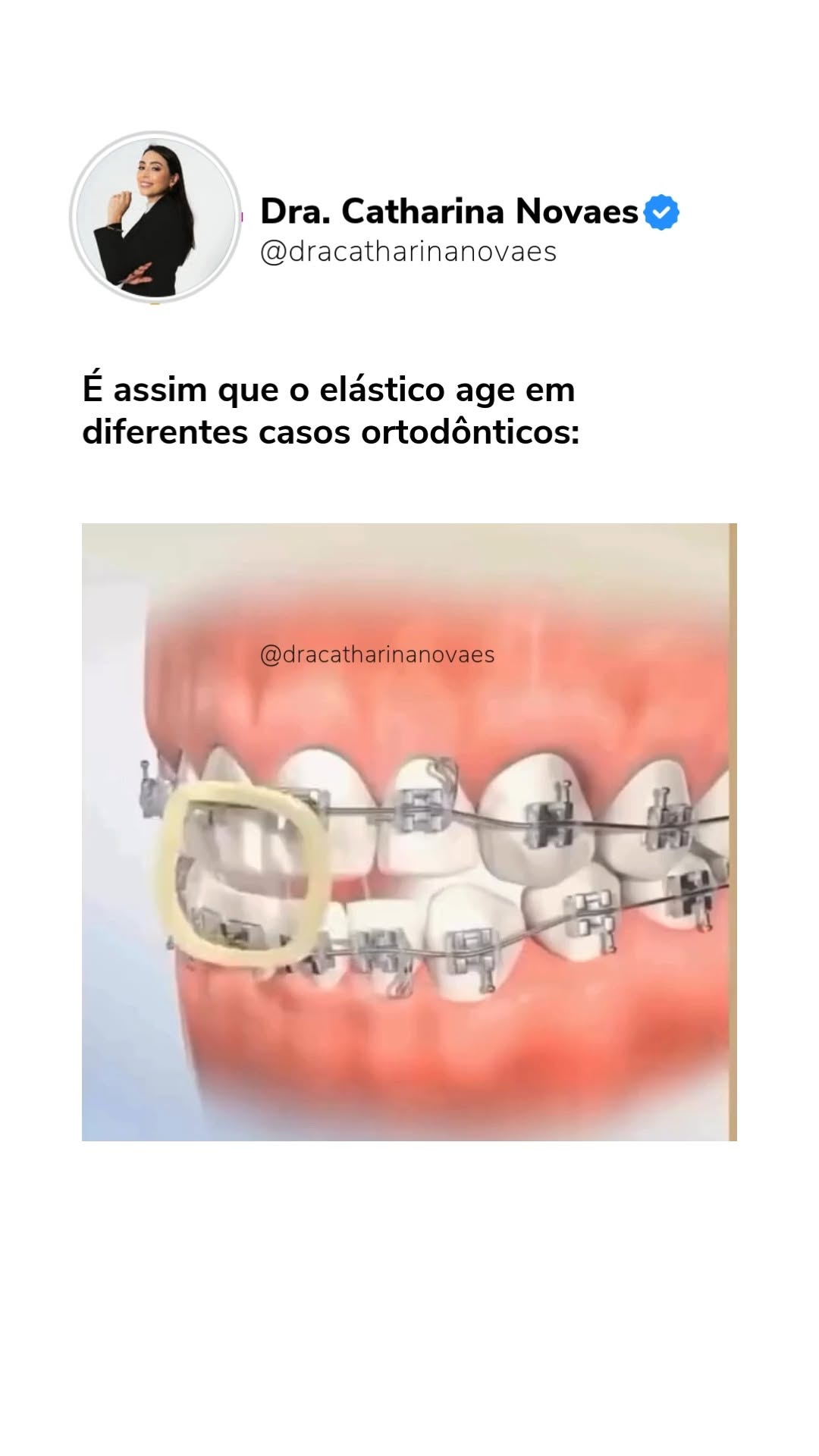
Orthodontic elastics are not just an accessory; they are active components that determine the success and duration of the treatment. Despite their small size, they make a significant difference. When used correctly, they shorten treatment stages and improve bite alignment.
What They Are For: Bite, Spaces, Jaw, and Occlusion
Elastics help the braces make movements that the wire alone cannot achieve. With them, the orthodontist can:
- Correct the bite: bring the upper and lower teeth into the correct alignment (Class II/III cases, overbite, or open bite).
- Close spaces: eliminate gaps that remain after aligning the teeth.
- Adjust the jaw position: guide the "gearing" between the maxilla and mandible for more comfortable chewing.
- Improve occlusion: refine the contact between the arches for long-term stability.
Adherence is Everything – How Continuous Use Shortens Treatment
Predictable results depend on correct and almost continuous use. Generally, they are only removed for eating and brushing, and then replaced immediately. Additionally, daily replacement maintains stable force. The indicated pattern of alignment (Class II, Class III, triangle, box, vertical, or diagonal) is as important as the duration of use. Irregular use causes the teeth to "go back and forth," delaying progress and potentially requiring extra adjustments. Therefore, follow your orthodontist's prescription to the letter.
Practical Guide for Use and Care
- How to put them on: Sit in front of a mirror, identify the hooks, and follow the indicated pattern. A plastic tool or "applicator" helps at first.
- How to remove: Carefully pull by the elastic without forcing brackets or hooks.
- Frequency of replacement: Change at least once a day or whenever removed for an extended period. Used elastics lose strength.
- If they break: Replace immediately and check if the pattern is correct.
- Pain and adaptation: Mild discomfort in the first few days is normal and tends to decrease. Prefer softer foods; use pain relief only if advised by a professional.
- Hygiene and safety: Remove for eating and brushing, do not reuse elastics, and keep them clean and dry.
- With aligners: Elastics may attach to "buttons" on the teeth or the aligner itself. The routine is similar, but the pattern is personalized.
Want to delve deeper with reliable sources? See guidelines from the American Association of Orthodontists (AAO) and the British Orthodontic Society — Patients.
Myths and Truths That Hinder Your Progress
- Myth: "Only works at night." Truth: The effect comes from consistent use throughout the day.
- Truth: "It may hurt at first." The tendency is to improve in a few days.
- Myth: "Two elastics speed things up." Excessive force can cause undesirable effects.
- Myth: "Any size will do." The prescription has the correct diameter and force for your case.
Common Problems and How to Avoid Them
- Skipping days: Create routines and set alarms on your phone (morning, after meals, and before bed).
- Using the wrong pattern: Check in the mirror and, if in doubt, ask your orthodontist for an illustration.
- Lack of replacement: Keep elastics at home, in your bag/backpack, and at work/school.
- Trying to "make up" later: Do not double the force. Simply resume correct use.
How to measure progress beyond photos? Observe improvements in bite "fit," reduction of spaces, more aligned midlines, and more comfortable chewing. Nevertheless, professional evaluation is decisive.
Frequently Asked Questions
How long should I wear them each day? Generally, almost all the time. Confirm exact times in your prescription.
Can I eat with them? It is recommended to remove them for eating and brushing, and replace them immediately afterward.
Does it hurt? For how long? Initial discomfort is common and tends to decrease in a few days. If the pain persists, inform your orthodontist.
What if I forget for a day? Resume immediately. Do not use two elastics to "make up."
Can I use two elastics to speed up the process? Not without professional guidance. Excessive force can hinder the result.
Next Steps
Your role is essential: the appliance moves, the elastic aligns. To safely accelerate results, follow the prescription, set reminders, and keep elastics nearby. Need personalized guidance or an adherence checklist? Contact Clínica Catharina Novaes and organize your usage plan today.