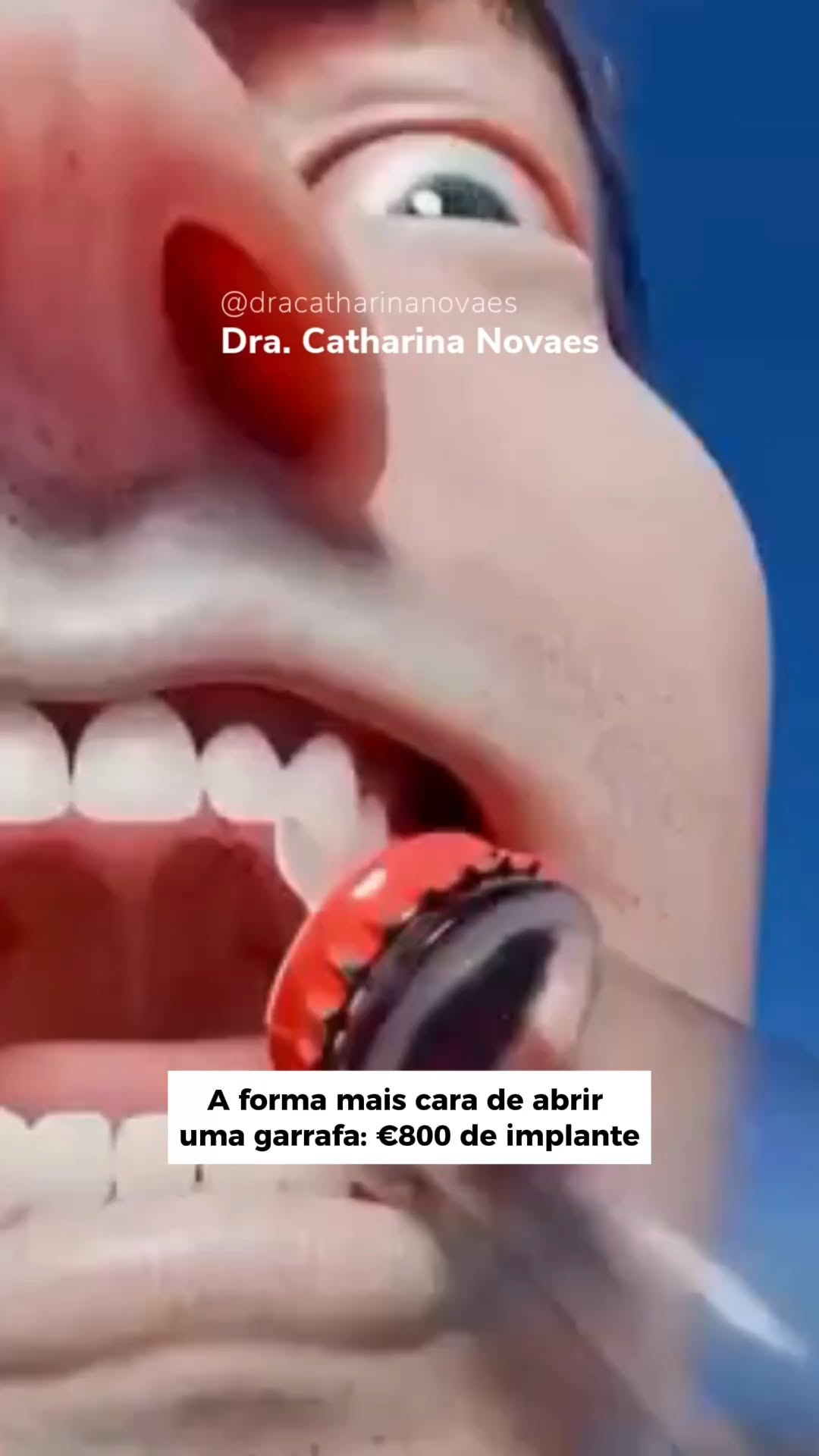
Opening bottles with teeth may look harmless in the moment, but the force you apply can damage the tooth from the inside out. Even if nothing breaks right away, tiny cracks can start and later turn into pain, sensitivity, or a dental emergency.
Why this “quick trick” is harder on teeth than it seems
Teeth are made to bite and chew food, not to work like a bottle opener. When you hook a cap with your tooth, you create a strong lever effect. That pressure concentrates on a small area, so the enamel and the layers underneath take a hit.
In other words, it’s not just “pressure.” It’s pressure in the worst possible spot.
What can happen inside the tooth
A tooth can look fine on the outside while stress builds within. Over time (or suddenly), that stress may cause:
- Microcracks that you can’t see in the mirror
- Enamel chips or fractures along the edge
- Cracks that reach deeper layers, increasing the chance of pain
- Damage to fillings, crowns, or veneers (they can chip, loosen, or start leaking)
Because these problems may start small, you might not notice anything at first. However, the tooth can become weaker with each “just this once.”
Warning signs after opening a bottle with your teeth
If you used your teeth and something feels “off,” pay attention. Common red flags include:
- Sharp pain when biting in one specific spot
- Sudden sensitivity to cold or hot drinks
- A rough edge that feels new with your tongue
- A filling that feels chipped, higher, or loose
- A tooth that darkens over time
If any of these show up, it’s safer to get checked sooner rather than later.
From simple fix to complex treatment: what it can lead to
Sometimes the damage is minor and easy to repair. In other cases, cracks spread and the tooth needs more protection.
Possible next steps (from simpler to more involved) include:
- Polishing a small chip or repairing a small area
- Replacing a filling or fixing a broken restoration
- Protecting the tooth with a crown when it’s weakened
- Root canal treatment if the nerve becomes irritated or infected
- In severe cases, extraction and replacement options
That’s why people call it “the most expensive way” to open a bottle: the cap comes off fast, but the repair can be long and costly.
Who is at higher risk
Anyone can crack a tooth this way, yet some people have less margin for error:
- People who clench or grind their teeth (bruxism)
- Anyone with large fillings, crowns, veneers, or bonding
- Teeth that already had a root canal (they may be more fragile depending on the case)
- A history of cracks, sensitivity, or frequent chips
If you fit one of these groups, avoiding risky habits matters even more.
“It’s not just bottles”: other risky ways people use teeth
Using teeth as tools is a common habit. These actions can cause similar problems:
- Tearing open packaging
- Cutting thread or fishing line
- Holding pins, nails, or hair grips
- Biting hard plastic caps or opening sachets
- Chewing ice
A good rule helps: if you wouldn’t do it with a ceramic plate, don’t do it with a tooth.
What a dentist may check if a crack is suspected
A dental visit doesn’t have to be scary. The goal is to find the cause and protect the tooth.
Your dentist may:
- Examine the tooth and your bite
- Test for sensitivity
- Check existing restorations
- Take an X-ray (although not every crack appears on imaging)
Sometimes monitoring is enough. Other times, early treatment prevents a bigger fracture.
Simple prevention: easier than paying for repairs
A few small habits make a big difference:
- Keep a bottle opener at home and in your bag or car
- Use a keychain opener for social events
- Ask for an opener instead of improvising
- Remind yourself: teeth are not tools
Next steps
If you recently tried opening bottles with teeth and now feel pain, sensitivity, or a sharp edge, don’t wait for it to get worse. Talk to our team on WhatsApp and describe what you’re feeling: https://wa.me/+351926533304
For more practical tips on protecting your smile, you can also explore our dental education resources at https://catharinanovaes.pt/.