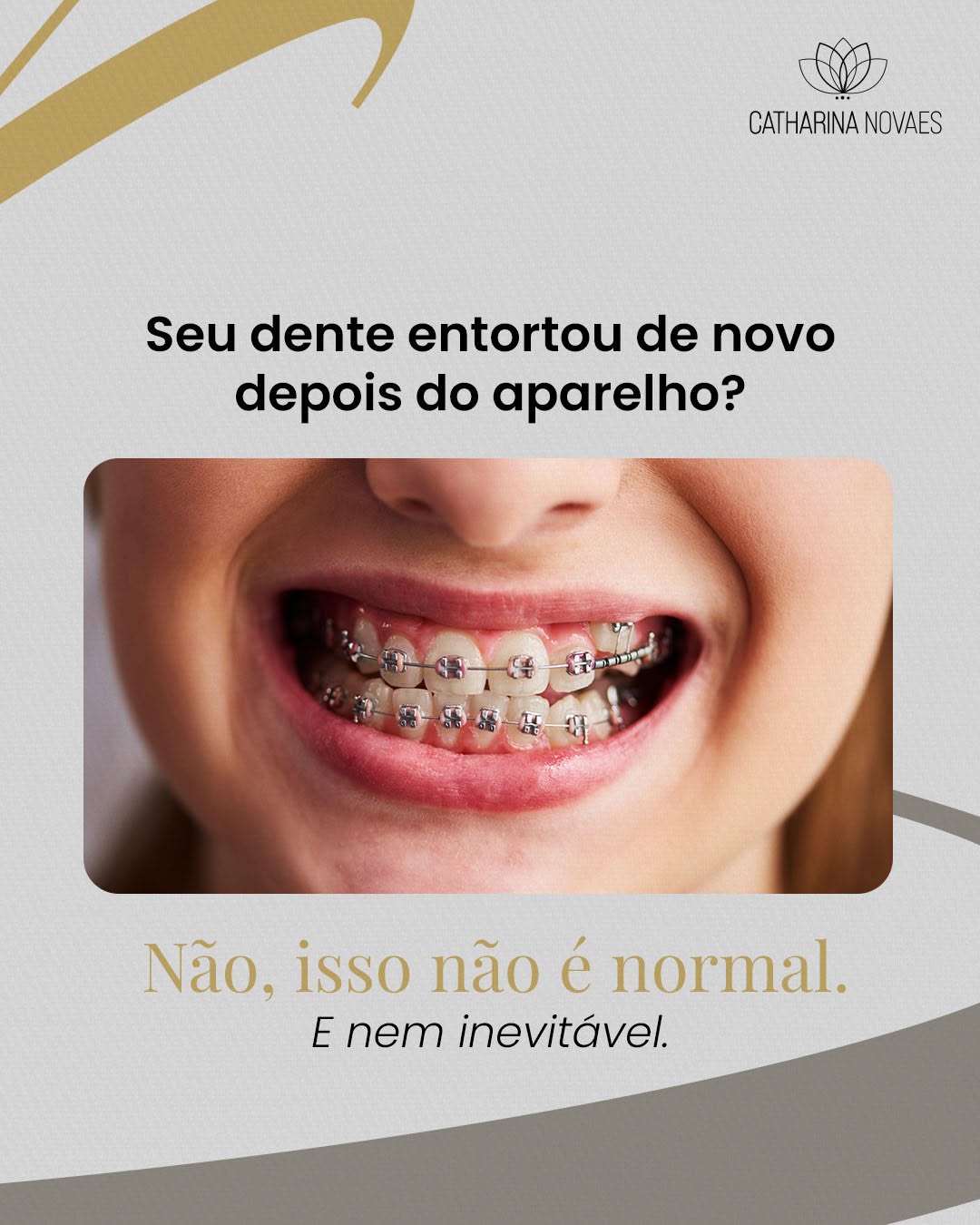
Preventing orthodontic relapse is possible — and it starts by understanding why your teeth have shifted. It is neither normal nor inevitable for alignment to be lost after removing braces. With proper retention, follow-up, and habit adjustments, you can maintain a beautiful and functional result for many years.
Teeth Shifting After Braces? How to Stop Relapse
If you've noticed a tooth rotating or slight crowding, take a deep breath. Your concern is valid, but there is a solution. The most important thing is to act early, as small changes are easier to correct and stabilize.
Orthodontic Relapse: A Simple Definition
Orthodontic relapse is when teeth tend to return, fully or partially, to their pre-treatment positions. The good news is that with an appropriate retention plan and follow-up, this risk is greatly reduced.
Why It Happens: Biological, Functional, and Behavioral Factors
- Periodontal biology: The fibers around the tooth "remember" the old position and can pull the tooth back.
- Facial growth pattern: Bone changes over the years can alter the bite fit.
- Tongue and breathing: Low tongue posture, mouth breathing, and atypical swallowing disrupt forces.
- Bruxism and muscle tension: Clenching or grinding can push teeth and create space for relapses.
- Arch collapse due to lack of retention: Without a retainer, the arch shrinks and crowding occurs.
- Tooth loss and gum health: Extractions, mobility, or inflammation also destabilize alignment.
Prevention in 3 Pillars
To prevent relapse, focus on three practical pillars that work together.
Retention: Fixed or Removable?
There are three common options, and the choice is personalized.
-
Fixed bonded retainer (wire behind the teeth):
• Pros: Discreet, works 24/7, excellent for holding incisors.
• Cons: Requires strict hygiene and check-ups; can detach.
• Recommended: Cases with a higher risk of anterior crowding. -
Essix removable retainer (clear tray):
• Pros: Aesthetic, covers the entire arch, easy to replace.
• Cons: Can deform with heat; needs consistent use.
• Recommended: Overall maintenance and post-aligners. -
Hawley retainer (acrylic with wire):
• Pros: Durable, adjustable in-office.
• Cons: More visible; may interfere with speech initially.
• Recommended: Cases requiring fine adjustments and robustness.
Fixed vs. removable retainer is not a contest, it's a strategy. Often, both are combined for maximum stability. Also, remember: retainers need maintenance, and when they deform or break, they should be replaced.
Clinical Follow-Up: When and What is Evaluated
After removing braces, schedule regular check-ups. During these visits, we observe:
- Integrity of the retainer (fixed and/or removable) and detachment points.
- Bite contact, chewing guides, and new small asymmetries.
- Gum health and presence of tartar around the bonded wire.
- Oral functions: breathing, tongue posture, and signs of bruxism.
With early adjustments, you avoid rework and protect your investment.
Parafunctional Habits: Identify and Correct
- Mouth breathing: Frequently open mouth, dry lips, snoring. An ENT specialist can help restore nasal breathing.
- Low tongue or pushing teeth: Orofacial myofunctional therapy retrains posture and swallowing.
- Bruxism: Bite plate, sleep evaluation, and physiotherapy reduce overloads.
Correcting function brings stability. Otherwise, the risk of relapse remains, even with good retention.
Early Signs That Something is Not Right
- Fixed retainer wire detaching at one point.
- Lower incisors starting to crowd.
- Bite "closing" differently when chewing.
- Removable retainer looser or with gaps in specific areas.
- Subtle misalignments appearing in selfies.
If you notice any signs, schedule a review. The sooner, the better.
Retainer Broke or Lost Fit? What to Do Now
- Avoid using the broken retainer to prevent injury or further deformation.
- Keep the pieces in a clean box and bring them to the appointment.
- Schedule an evaluation ideally within 24 to 72 hours.
- Do not attempt to glue it at home: incorrect adhesives irritate gums and hinder adjustment.
In many cases, we can repair or replace quickly and stop the relapse in time.
When Retention Alone Solves It and When to Retreat
- Mild relapse: Often resolved with a new retainer or small adjustments. Short-term aligners can refine.
- Moderate to severe relapse: Requires complete orthodontic re-planning, always with an analysis of functional causes to avoid repeating the problem.
In other words, the decision goes beyond aesthetics. Consider function, stability, and your goals.
Daily Care with Retainers
- Hygiene: Soft brush and neutral soap for removable; floss threader for fixed.
- Heat: Do not leave the Essix in the sun or hot water, as it deforms.
- Replacement: Essix usually needs periodic replacement; fixed requires control and occasional re-cementation.
Maintain a simple routine, and thus, extend the life of your retainer.
Illustrative Mini-Case
Ana, 27, noticed slight crowding in the lower incisors six months after removing braces. The fixed retainer detached at one point without her noticing. We adjusted hygiene, re-cemented the wire, and used aligners for 10 weeks to correct the relapse. In parallel, she started myofunctional therapy for low tongue posture. Result: alignment recovered and stability reinforced.
Quick Myths vs. Facts
- "After braces, it's resolved forever." — Myth. Stability requires retention.
- "Fixed retention dispenses with check-ups." — Myth. It needs control and hygiene.
- "Mouth breathing does not influence alignment." — Myth. It can affect muscle balance and stability.
Frequently Asked Questions
Is it normal for teeth to move after removing braces?
Small adaptations may occur, but relapse is not inevitable. With a retention plan and follow-up, the risk is greatly reduced.
Do I need to wear a retainer forever?
It depends on the case. However, prolonged retention is common to maintain the result. Guidance is personalized.
Retainer detached: should I go urgently?
Yes, ideally within 24–72 hours. This way, you prevent the tooth from moving.
Do aligners solve mild relapse?
Often, yes. Short treatments with aligners refine and stabilize.
How do I know if I have mouth breathing?
Observe slightly open lips, dry mouth, fatigue when chewing, and snoring. If you suspect, request a functional evaluation.
Useful Resources
- Simple infographic on retainers (fixed/removable), pros and cons.
- Checklist "Signs that your retention needs a review."
- Flowchart "Retainer broke — what to do now."
For more information on retention and stability, also consult the American Association of Orthodontists.
Next Steps and Call to Action
If your teeth have started to move, don't wait. Contact me directly for a quick screening and schedule your in-person evaluation. I attend at Orthodontics in Porto with a personalized plan: well-done retention, regular follow-up, and habit correction for a stable and lasting smile.