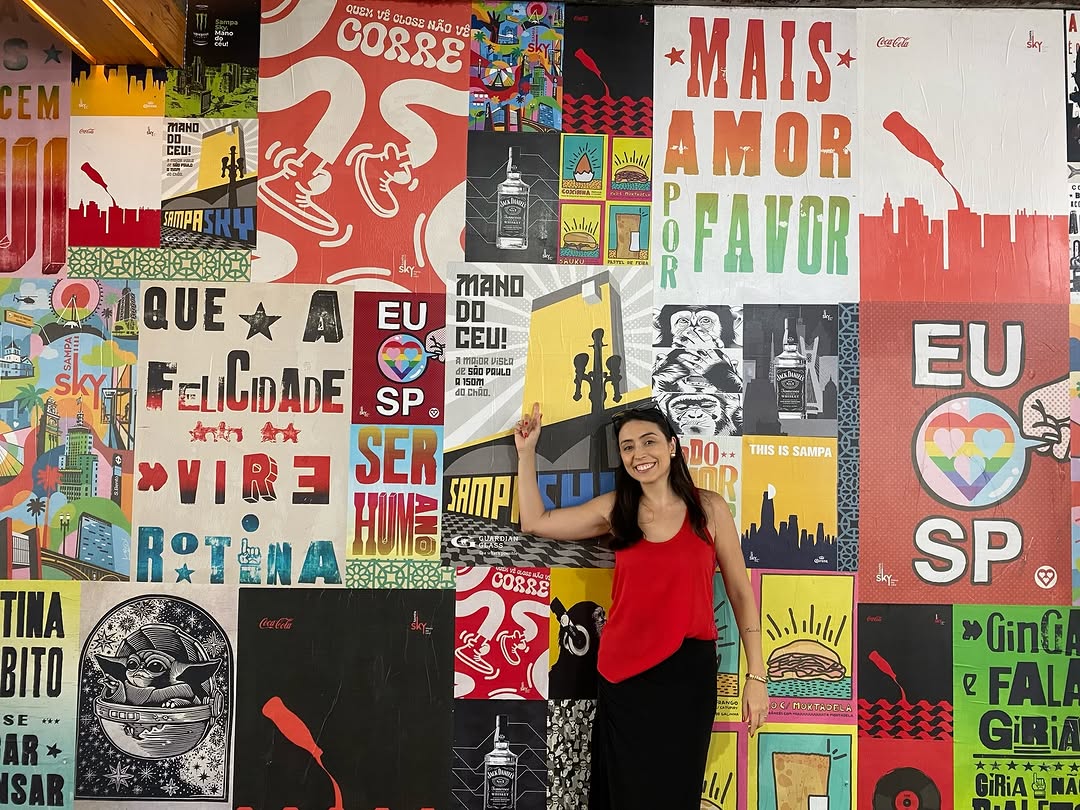
Sao Paulo nostalgia hits me in a very specific way: I don’t miss the traffic, but I miss the chaos.
São Paulo has a birthday, and that always pulls me back into memories—like flipping through an old carousel of moments. The feeling is warm and messy at the same time. Even from far away, the city still sounds like it’s moving.
A love story with an asterisk
I won’t romanticize everything. I don’t miss losing hours in traffic, arriving tired before the day even started, or planning life around commute times. That part can stay in the past.
And yet, something else remains. I miss the city’s “organized disorder”—the kind of chaos that feels like a shared language. Only people who lived it really understand why it can feel comforting.
What the city takes—and what it gives back
São Paulo is a paradox, and that is the point.
On one side, it takes:
- Time, because everything is far and the lines are long
- Energy, because the pace is always demanding
- Patience, because noise and urgency can follow you everywhere
On the other side, it gives:
- Opportunity, because there is always a door to knock on
- Variety, because you can find “your place” in a thousand different ways
- Momentum, because the city pushes you forward even when you feel stuck
So the relationship never becomes simple. Instead, it becomes real.
The city you feel with your senses
São Paulo is often described with a few strong words, and they fit.
It is gray—not only in color, but in mood on certain days. Still, the gray has its own beauty, especially when it frames neon signs, street art, and the glow of late-night windows.
It is loud. Buses, horns, people talking fast, music leaking from somewhere you can’t see. However, that sound can also mean company.
It is intense. The rhythm asks for your attention all the time. Even so, intensity is part of why the city feels alive.
And yes, it never sleeps. There is always a bakery open, a bar still full, a friend texting “one more stop,” or a plan that starts after midnight.
Missing the rhythm, not the commute
Nostalgia is rarely about the city as an object. More often, it’s about layers: routines, small routes, familiar corners, and the people you met along the way.
Urban memory works like that—our minds keep fragments and turn them into meaning. Research on city memories often notes that what we miss is not a place in a literal sense, but the personal life we lived inside it. You can explore that idea in Cidade Como Tela: memórias urbanas (Portuguese academic work) here: Cidade Como Tela: memórias urbanas.
The real reason São Paulo stays special: people
In the end, the city becomes more than streets and buildings.
Family and close friends are what make São Paulo feel like “mine.” They are the true landmarks. Because of them, even the hard parts gain context, and the good parts shine brighter.
That’s why a birthday tribute to São Paulo is never only about São Paulo. It’s also about shared stories, photos that hold whole eras, and the kind of love that survives distance.
Next steps: tell me what your city means to you
If this brought your own memories to the surface, I’d love to hear them. What do you miss—and what are you glad you left behind?
To share your story (or just say hi), message me on WhatsApp: https://wa.me/+351926533304
And if you enjoy personal essays like this, you can also explore more writing on my site here: Catharina Novaes.