Types of orthodontic braces have evolved significantly over the last two decades, and today patients in Porto — and around the world — have more options than ever before. Choosing between metal, self-ligating, and clear aligners is not simply a matter of taste. In fact, the right choice depends on clinical factors that only a trained orthodontist can fully evaluate.
Metal Braces: Tried, Tested, and Still Relevant
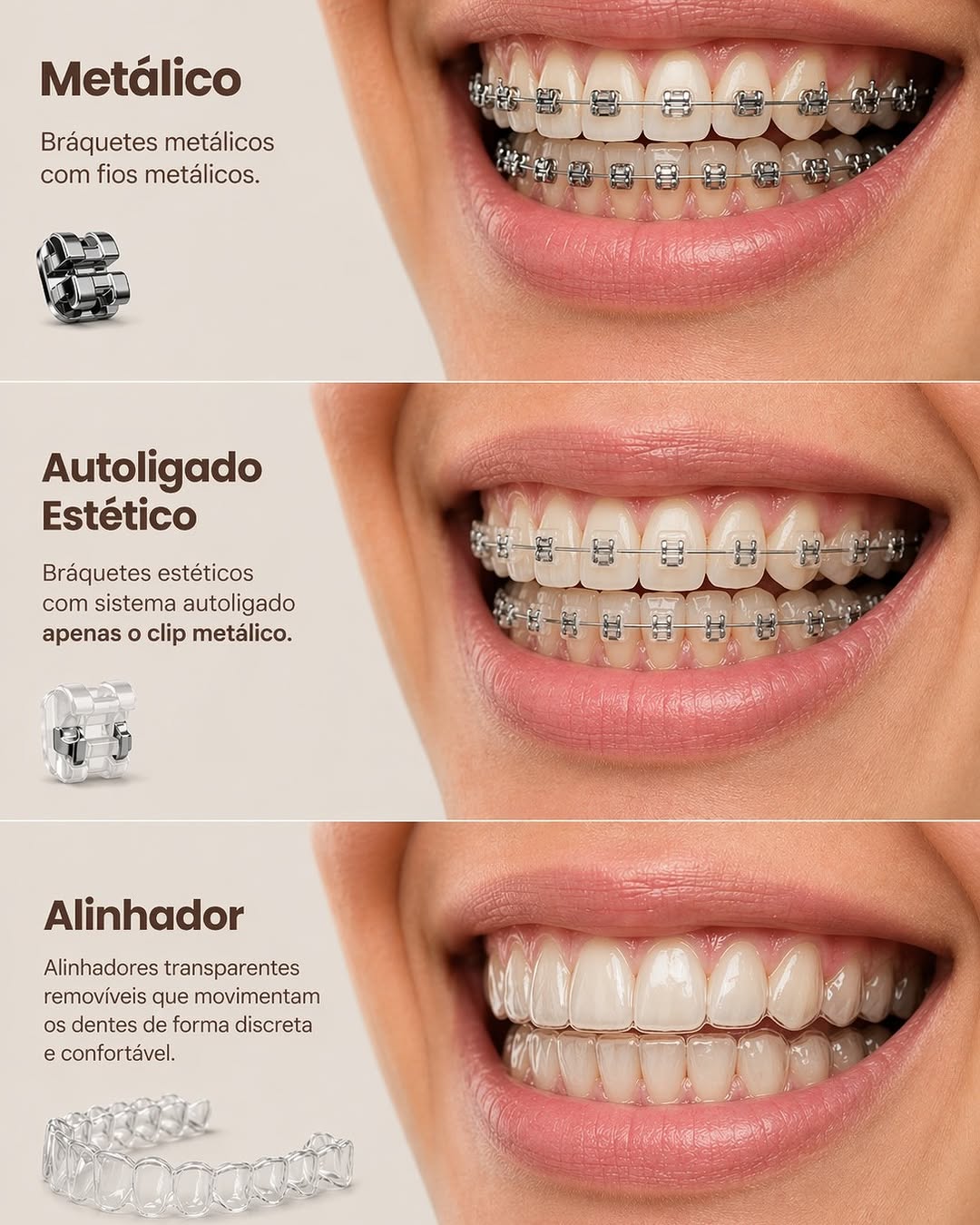
Metal braces are the most traditional option. They use small brackets bonded to each tooth, connected by a wire that is tightened regularly to guide teeth into position. Because they are the most affordable choice, many patients assume they are outdated — but that is far from true.
Metal braces remain the gold standard for complex cases, including severe crowding, significant bite problems, and skeletal misalignments. They offer precise control, which is why many orthodontists still recommend them for challenging situations. However, the rubber bands used to hold the wire create friction, which means more adjustment appointments throughout treatment.
Keeping metal braces clean also requires extra effort. Food can get trapped around the brackets, so a thorough brushing routine becomes essential. If you are looking for guidance, this article on brushing teeth with braces covers the right technique step by step.
Self-Ligating Braces: The Option Most Patients Do Not Know Exists
Self-ligating braces look similar to metal braces at first glance, but there is one key difference: they use a built-in clip mechanism instead of rubber bands. This small change has a significant clinical impact.
Without elastic ties, there is less friction on the wire. According to Colgate, self-ligating braces can reduce treatment time by up to seven months compared to conventional metal braces, while also requiring fewer adjustment visits. For patients who want efficiency without committing to the full discipline of clear aligners, self-ligating braces offer an excellent middle ground.
Cleaning is also simpler compared to traditional brackets, since there are no rubber bands to trap food or stain over time. Many patients who are concerned about hygiene find this option easier to manage in their daily routine.
Clear Aligners: Maximum Aesthetics, Maximum Responsibility
Clear aligners — such as Invisalign — use a series of custom-made, removable trays to gradually move teeth. Each tray is worn for about one to two weeks before the patient moves to the next in the series. The appeal is obvious: they are nearly invisible and can be removed for meals and social occasions.
That said, aligners come with one non-negotiable requirement: they must be worn for a minimum of 22 hours per day. Patients who frequently remove them — during meetings, events, or simply out of habit — end up extending their treatment without realising it. For a deeper look at why wear time matters so much, this post on clear aligner wear explains the consequences in plain terms.
Aligners are also not the right solution for every case. Severe crowding, complex bite corrections, or patients with certain gum conditions may not be suitable candidates. The decision should always come after a proper clinical evaluation — not a quick online quiz.
Aesthetics vs. Clinical Fit — They Are Not the Same Thing
One of the most common misconceptions patients bring to a consultation is the idea that the most discreet option is automatically the best one. Wanting an invisible appliance is completely understandable, especially for adults. However, prioritising appearance above all else can lead to a treatment that is slower, less effective, or simply unsuitable for the actual clinical need.
Think of it this way: the right appliance is like the right medication — it only works properly when matched to the specific condition being treated. A clear aligner prescribed for a case that truly needs metal control will deliver disappointing results, regardless of how discreet it looks.
How Your Daily Routine Shapes the Decision
Beyond the clinical picture, a patient's daily routine is a genuine variable in treatment planning. Someone who speaks publicly for hours every day may find aligners uncomfortable and disruptive. On the other hand, a professional who values discretion and can maintain consistent wear habits may find that aligners fit seamlessly into their life.
Patients with a busy social schedule, or those who know they will struggle to keep trays in for 22 hours, are often better served by a fixed appliance. The orthodontist's role is to factor in these real-life realities — not just the X-ray. For more on how personalised care improves outcomes, this article on humanised orthodontic care explores the topic in depth.
Why the Orthodontist — Not the Patient — Makes the Final Call
This might sound counterintuitive in an era of patient autonomy, but when it comes to appliance selection, the specialist's judgement is not optional. An orthodontist evaluates bone structure, gum health, the complexity of the misalignment, and the patient's overall profile — all before making a recommendation.
The internet is full of comparison guides and social media posts that make appliance selection seem like a simple consumer choice. However, picking a treatment based on what a friend used or what looks best in photos is a shortcut that often leads to longer treatments, unexpected complications, or additional costs. A proper in-person evaluation is always the right starting point.
Find Out Which Braces Are Right for You
If you are in Porto and want to know which appliance suits your specific case, the best next step is a personalised consultation. Every smile is different, and every treatment plan should be too.
Book your evaluation via WhatsApp and get a clear, honest assessment of your options — no pressure, no guesswork.
Frequently asked questions
What types of orthodontic braces are available today?
Patients today choose between metal braces, self-ligating braces and clear aligners. The right choice is not simply a matter of taste: it depends on clinical factors that only a trained orthodontist can fully evaluate, including the complexity of the case, gum health and the patient's goals and routine.
How do self-ligating braces differ from metal braces?
Self-ligating braces look similar but use a built-in clip mechanism instead of rubber bands, which means less friction on the wire. This can reduce treatment time by up to seven months compared to conventional metal braces while requiring fewer adjustment visits. Cleaning is also simpler, since there are no rubber bands to trap food or stain.
How many hours a day must clear aligners be worn?
Clear aligners come with one non-negotiable requirement: they must be worn for a minimum of 22 hours per day. Each custom tray is worn for about one to two weeks before moving to the next. Patients who frequently remove them during meetings, events or out of habit end up extending their treatment without realising it.
Are metal braces outdated compared to newer options?
No. Although they are the most affordable choice, metal braces remain the gold standard for complex cases, including severe crowding, significant bite problems and skeletal misalignments, because they offer precise control. The rubber bands do create more friction and require more adjustment appointments, and cleaning takes extra effort.