Preventive orthodontics for children is one of the most powerful tools a parent has — and one of the least used. Most people associate orthodontics with teenagers wearing braces for a few years. However, the field goes far beyond straightening teeth: it is about guiding how a child's face, jaw, and airways develop during the years when change is still possible.
The Growth Window You Cannot Get Back
Between ages 5 and 6, children's facial bones are soft and responsive to gentle guidance. This period — sometimes called the "golden window" — is when an orthodontist can redirect jaw growth, widen a narrow palate, or stop harmful habits before they leave a permanent mark.
Once growth is complete, usually by the late teens, bones become fixed. Correcting jaw problems at that stage often means two to three years in fixed braces, possible tooth extractions, or even orthognathic surgery — a procedure that repositions the jaw under general anesthesia. That kind of treatment is expensive, physically demanding, and emotionally taxing. In contrast, early preventive care tends to involve simpler appliances, shorter treatment times, and significantly lower costs.
The difference between treating a problem at age 7 and treating it at age 27 is enormous — in every sense.
It Is Not Just About Teeth
Many parents are surprised to learn that an orthodontist evaluates much more than tooth alignment. Breathing patterns, sleep quality, jaw development, and even posture all fall within the scope of a thorough orthodontic assessment.
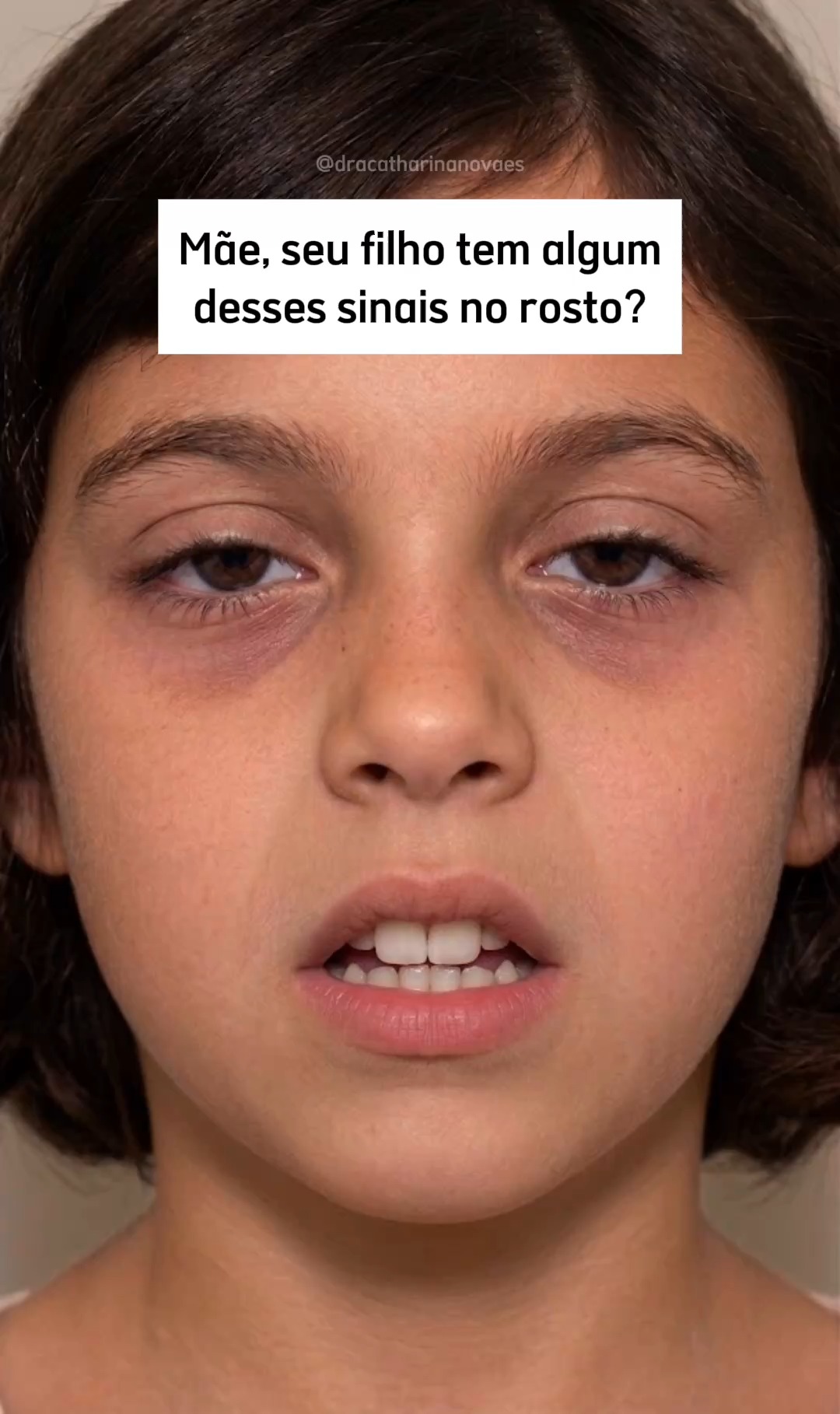
Mouth breathing is a prime example. When a child consistently breathes through the mouth instead of the nose — even just during sleep — it gradually changes the shape of the face. The jaw grows downward instead of forward, the palate narrows, and the dental arch becomes compressed. Over time, these changes affect how teeth come in and how the bite functions.
A study published in the Brazilian Journal of Otorhinolaryngology found that children aged 6 to 10 who were chronic mouth breathers already showed measurable differences in jaw angle and facial structure compared to nasal breathers. These differences tend to worsen if the underlying cause is not addressed early.
Beyond facial shape, there is the issue of sleep. Children who snore, toss and turn at night, or wake up feeling tired may be experiencing obstructive sleep apnea — a condition with a strong link to jaw and airway anatomy. Poor sleep in children shows up as difficulty concentrating, low energy, and sometimes behavior problems at school. Therefore, a simple orthodontic evaluation can set off a chain of positive changes in your child's overall health.
10 Signs That Deserve an Orthodontist's Attention
The following list is not a cause for alarm — it is a checklist. If your child shows one or more of these signs, a professional evaluation is worthwhile.
- Mouth breathing or mouth always slightly open — The most common and most overlooked sign. It affects jaw growth, sleep quality, and concentration.
- Frequent snoring or restless sleep — Children should breathe quietly during sleep. Snoring in a child can signal airway restriction.
- Crossbite — Upper teeth sit behind lower teeth when biting. This is much easier to fix when caught early, often with a simple expander.
- Open bite — Front teeth do not touch when the mouth is closed.
- Crowded or twisted baby teeth — If small teeth are already crowded, adult teeth will have even less room to come in straight.
- Early loss of a baby tooth — Neighboring teeth can drift and block the adult tooth from erupting in the correct position.
- Thumb sucking or pacifier use past age 3 — Sustained pressure on the palate changes its shape over time.
- Speech difficulties or unclear sounds — Teeth, tongue, and palate all work together to produce clear speech; misalignment can affect this.
- Difficulty chewing or avoiding hard foods — This can signal a bite problem, jaw discomfort, or a structural issue worth assessing.
- Off-center smile or visible jaw asymmetry — If one side of the face looks different from the other, the jaw may be growing unevenly.
Noticing one of these signs does not mean your child needs years of treatment. In many cases, a short and targeted intervention at the right age eliminates the need for more complex treatment later.
What Preventive Treatment Actually Looks Like
At this stage, treatment rarely involves full braces. Instead, an orthodontist might recommend a palate expander to widen the upper jaw, a habit-breaking device if the child still sucks a thumb, or simply a monitoring plan with periodic check-ins.
As detailed in this early orthodontic evaluation guide, the goal is always to work with the body's natural growth — not to rush it, and not to wait until it has finished. The timing of the intervention matters as much as the intervention itself.
In many cases, parents leave that first consultation relieved to hear that no immediate treatment is needed — just observation. But having that clarity early on is valuable in itself.
Preventing Problems Before They Become Serious
Think of preventive orthodontics the way you think of a vision screening or a routine pediatric check-up: not because something is already broken, but because small corrections early on prevent big problems later.
Jaw pain, headaches, sleep disorders, difficulty chewing, and even posture issues in adulthood can often be traced back to orthodontic problems that were present — and fully treatable — during childhood. The financial cost of corrective surgery, the physical toll of long treatment, and the lost quality of life along the way are all avoidable with timely action.
An initial orthodontic evaluation for a child typically takes about 30 minutes. It gives you a clear picture: is everything developing well, does your child need monitoring over time, or is it time to act now?
Ready to Take the First Step?
If anything in this article made you think of your child — or someone close to you — the next step is simple. Reach out via WhatsApp at +351 926 533 304 to book a first orthodontic evaluation. There is no commitment involved — just a conversation about your child's development and what, if anything, can be done to protect it.