Early orthodontics for children is about far more than a pretty smile — it is a critical tool for guiding how your child's jaw and face grow during the years that matter most. Many parents assume braces are something to plan once all adult teeth have arrived. However, by that point, the most effective window for simple, low-effort intervention may already be closing.
Braces in Childhood: It's About Function, Not Just Looks
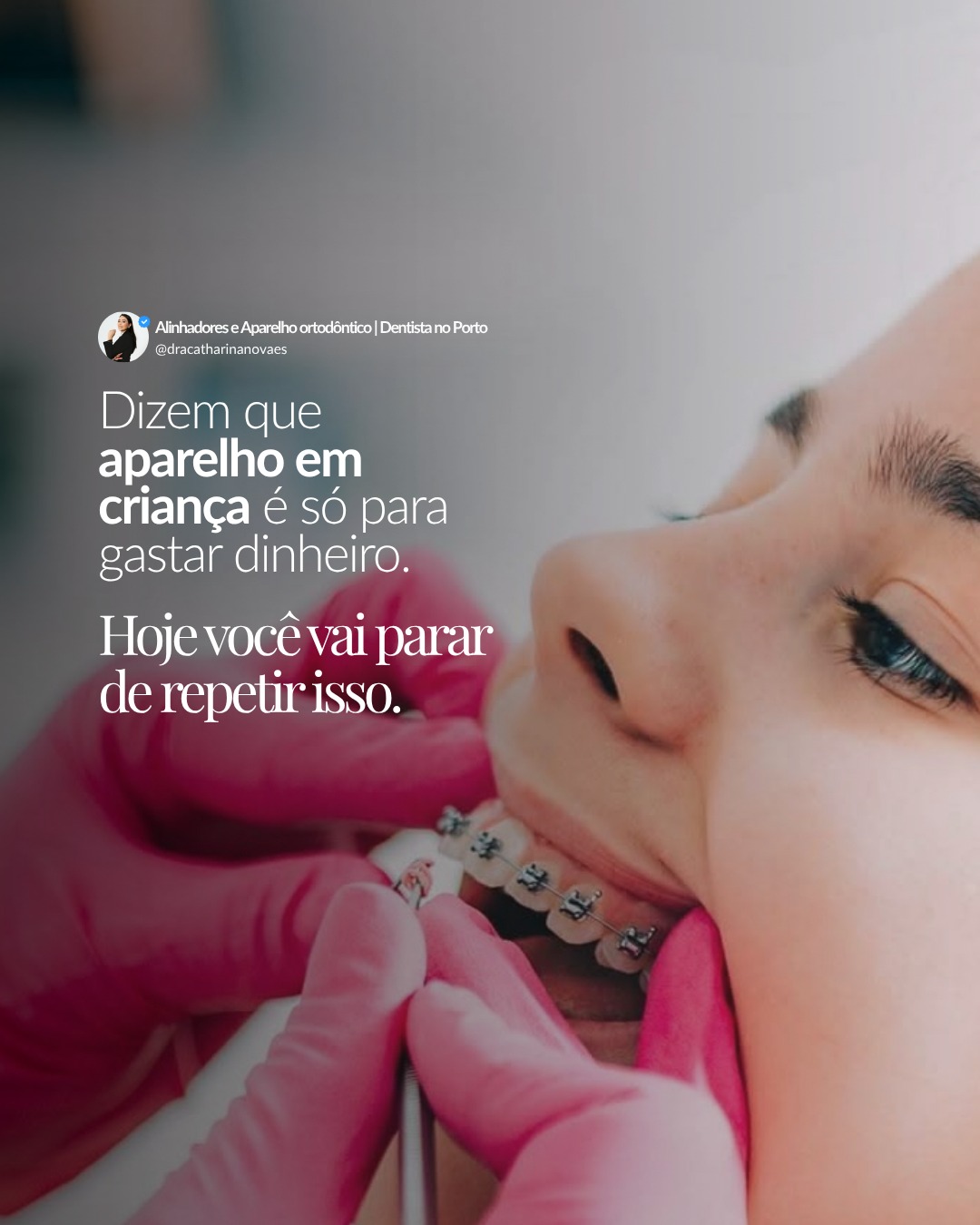
When parents picture childhood braces, cosmetics often come to mind first. In reality, the main goal of treating children early is to guide the growth of the jawbones while they are still soft and responsive. Conditions like crossbites, underbites, and jaw mismatches do not fix themselves over time — they deepen with age, making future treatment far more complex and expensive.
According to a study published in the Dental Press Journal of Orthodontics (SciELO, 2022), interceptive orthodontic treatment during childhood can even eliminate the need for a second, more intensive treatment phase later in life. Beyond individual cases, data presented to the Brazilian Senate in 2026 shows that dental misalignment in children has already surpassed tooth decay in prevalence — a sign that this is a widespread problem that often goes unaddressed.
The Growth Window: Why Ages 6 to 12 Are So Important
Between ages 6 and 12, the bones of the face are remarkably flexible and responsive to guidance. Functional appliances — such as palate expanders, facemasks, and bionators — work with the body's natural growth to reshape bone in ways that become impossible once the skeleton matures.
The Federal Council of Dentistry (CFO) recommends that children receive their first orthodontic evaluation at age 7, even if no problem is visible. Treatment during this phase typically lasts just 9 to 15 months — a fraction of what an adult correction would require. Think of it as a window that gradually closes: the earlier you act, the simpler and shorter the process. Once growth stops, that window shuts for good.
The Real Cost of Waiting
Untreated jaw discrepancies don't stay manageable — they grow alongside the child. Problems that a simple expander could have corrected during childhood can progress to the point where jaw surgery (orthognathic surgery) becomes the only adult solution. That is a hospital procedure with real costs, long recovery, and significant risk.
The effects go beyond the jaw, too. Poor alignment is closely linked to mouth breathing, which affects sleep quality, focus, and even school performance. It can also lead to speech difficulties and chewing problems. Furthermore, losing a baby tooth too early can steal the space a permanent tooth needs — a simple space maintainer, placed at the right time, can prevent months of future work. As explained in Baby Teeth to Permanent Teeth: Early Care, early attention to these transitions makes a lasting difference.
What a Preventive Evaluation Actually Checks
A specialist's check-up goes well beyond looking at the teeth. The orthodontist examines the relationship between the upper and lower jaw, screens for habits like thumb-sucking, pacifier use, and mouth breathing, and identifies whether early tooth loss has affected spacing for permanent teeth.
Crossbites, crowding, and uneven spacing are all evaluated with the child's growth trajectory in mind — not just their current state. If your child regularly breathes through their mouth, that alone is worth investigating. As discussed in Mouth Breathing in Children: Warning Signs, this habit is often connected to issues that directly shape jaw development.
Quick Checklist: Signs to Watch For
Here are some things that may signal it's time for an evaluation:
- Open mouth at rest or during sleep
- Snoring or restless sleep
- Difficulty chewing or biting food
- Thumb-sucking or pacifier use past age 3
- Visible jaw asymmetry or protruding teeth
- Early or late loss of baby teeth
- Crowded or rotated front teeth
- Lisping or difficulty with certain sounds
One or more of these is a reason to act — not to wait and see.
What Early Treatment Actually Gives Your Child
Acting early is not about rushing or over-treating. Rather, it is about meeting the problem while it is still small — before bones set, habits deepen, and simple fixes become surgical ones. Research consistently shows that interceptive treatment at the right age reduces duration, lowers overall cost, and in many cases prevents the need for a corrective phase altogether.
Parents who choose early evaluation give their children more than aligned teeth. They give them easier breathing, better sleep, clearer speech, and a more balanced facial structure — benefits that carry forward for life.
Take the First Step Today
If your child is around 7 years old — or if you recognized any of the signs above — now is the right moment for a preventive orthodontic evaluation. You don't need to wait for a visible problem to book an appointment.
Reach out directly on WhatsApp to schedule a consultation: Chat with us on WhatsApp. Have questions first? Leave them in the comments below or browse the blog for more guidance.